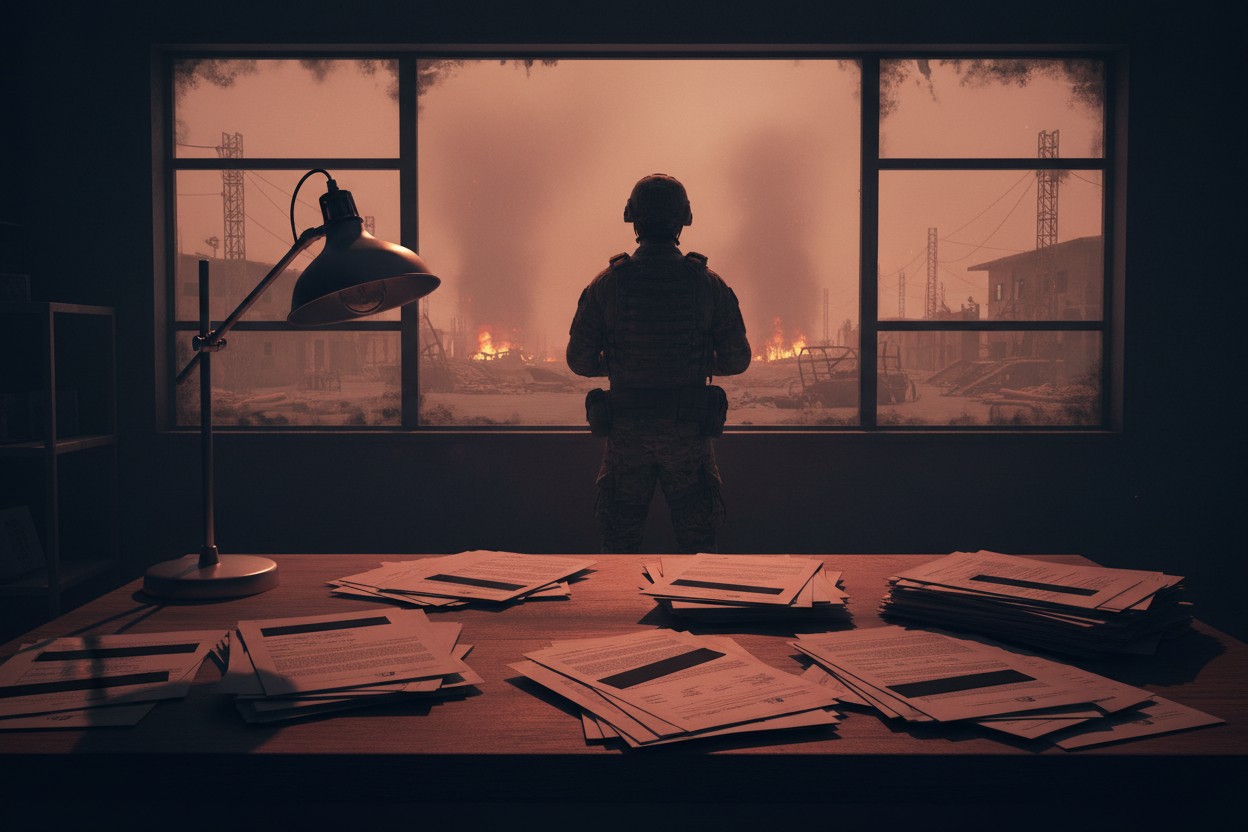
Op-Ed Alleges U.K. Establishment Campaign to Prepare Public for War With Russia
09/27/2026 / By Garrison Vance

Russia Today (RT) published an opinion column on Thursday, Sept. 24, by historian Tarik Cyril Amar alleging that Britain’s political and media establishment is conducting a propaganda campaign – described in North Atlantic Treaty Organization (NATO) terminology as “cognitive warfare” – to prepare the public for a war with Russia.
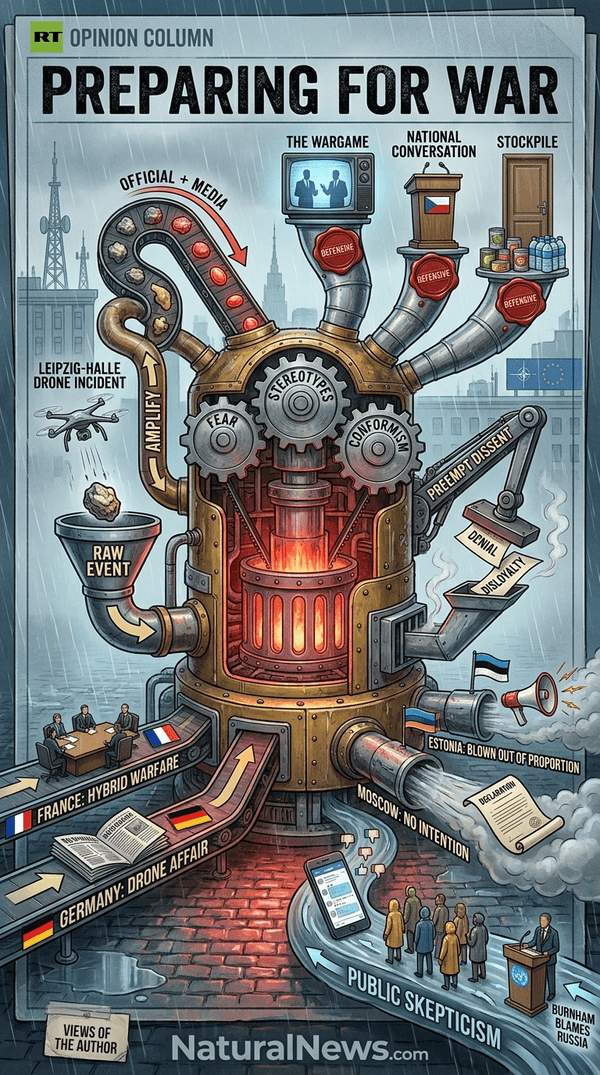
According to the column, Moscow has repeatedly declared it has no intention of attacking NATO or the U.K., and those declarations are ignored. The article states that the campaign frames any conflict as strictly defensive and tells the population it must prepare to withstand and resist a Russian attack.
The column cites parallel developments in France, where President Emmanuel Macron called a meeting on “Russian hybrid warfare,” and in Germany, where officials and media have focused on a drone incident at Leipzig-Halle airport. The piece was published under RT‘s opinion section and carries a disclaimer that the views expressed are solely those of the author.
U.K. Figures and Media Cited
The column names former Conservative minister Jacob Rees-Mogg as making what it calls the most grotesque contribution, citing his remarks about “circumstances where people may have to die” and an analogy to the fall of Rome. Amar writes that Rees-Mogg’s reference to paying others to fight and die may be a “Freudian slip” given Western support for Ukraine.
The article points to Sky News‘ four-part docudrama “The Wargame,” which it says is built on the premise that Russia is about to attack and features former politicians Michael Gove and Nicola Sturgeon. It quotes British Chief of the Defense Staff Air Chief Marshal Sir Richard Knighton referring to a “national conversation on defense” and saying the purpose is to remedy “what the British public hasn’t got, […] haven’t understood.”
Amar describes Knighton’s approach as patronizing and “positively Orwellian,” and notes Knighton held up Estonia and Sweden as examples of societies where threat awareness is part of daily life. The column also references a report that the British government is dusting off a classified Cold War manual, telling households to stockpile canned food and bottled water at home, while state media puts out articles debating whether the country is mentally prepared for war, according to Modernity News [1].
European Context and Counterpoints
The article states that Estonian authorities, despite generally hawkish views on Russia, have called on NATO and European Union countries to reduce alarmism. It quotes Estonian officials saying the Russia-at-the-gates narrative “has been blown completely out of proportion” and that “there is absolutely no reason to believe that Russia is imminently going to launch a military attack on NATO, Estonia or the Baltic states.”
Amar argues that war propaganda is almost immune to its own absurdities and inconsistencies because it operates on fear, stereotypes, and conformism rather than reason. This observation aligns with research on human threat management systems, which shows that fear-related responses can override rational assessment of danger [2]. The column also asserts that some British establishment members want to reinforce conformism by locking up dissenters, though it does not provide specific names or legal proposals.
The broader European context includes what Amar describes as similar establishment-induced hysteria across much of NATO-EU Europe. In Germany, the drone affair at Leipzig-Halle airport has been repeatedly stirred by Berlin and its mainstream media, though Russian Foreign Ministry spokeswoman Maria Zakharova dismissed the allegation as baseless, stating that “this whole drone story is based on nothing: there are no facts, no supporting materials, absolutely zero, nothing” [3].
Author’s Conclusions and Dissent
Amar writes that U.K. Prime Minister Andy Burnham used his first UN General Assembly address to blame Britain’s problems on Russia rather than on his predecessor Keir Starmer. The article states that social media shows signs many Britons do not appreciate efforts to scare and mobilize them for what the author calls a senseless war.
Amar concludes that the “elites” are insane and malevolent, and that any hope for peace and a return to reason will have to come from below. The column reflects a broader pattern of establishment messaging that critics say relies on psychological manipulation rather than factual threat assessment, a concern echoed in analyses of media influence on public perception [4].
Conclusion
The RT column presents an opinion-based account alleging a coordinated U.K. establishment campaign to prepare the public for war with Russia, citing Rees-Mogg, Knighton, Sky News and European examples. It also cites Estonian officials who dispute the imminence of any Russian attack, and it includes RT‘s standard disclaimer that the views are the author’s alone.
No independent verification of the column’s claims was provided in the article, and the assertions remain attributed to Amar and the sources he quotes. The piece reflects ongoing tensions in public discourse over threat perception and the role of media in shaping public attitudes toward military conflict.
References
- Modernity News. “They’re Telling Us A Major WAR Is Coming…”. September 21, 2026.
- Steven L. Neuberg. “Human threat management systems: Self-protection and disease avoidance”. Neuroscience and Biobehavioral Reviews.
- NaturalNews.com. “Russia’s Zakharova Dismisses German Drone Allegation as Baseless Pretext for Consulate Closure”. September 6, 2026.
- Mike Adams interview with Peter McLaughlin. April 1, 2024.
Explainer Infographic
Submit a correction >>
Tagged Under:
Andy Burnham, big government, chaos, Collapse, deception, Jacob Rees-Mogg, lies, Michael Gove, national security, Nicola Sturgeon, North Atlantic Treaty Organization, op-ed, outrage, preparedness, propaganda, propaganda campaign, Richard Knighton, Russia, Russia Today, Sky News, survival, Tarek Cyril Amar, United Kingdom, war with Russia, WWIII
This article may contain statements that reflect the opinion of the author
RECENT NEWS & ARTICLES